
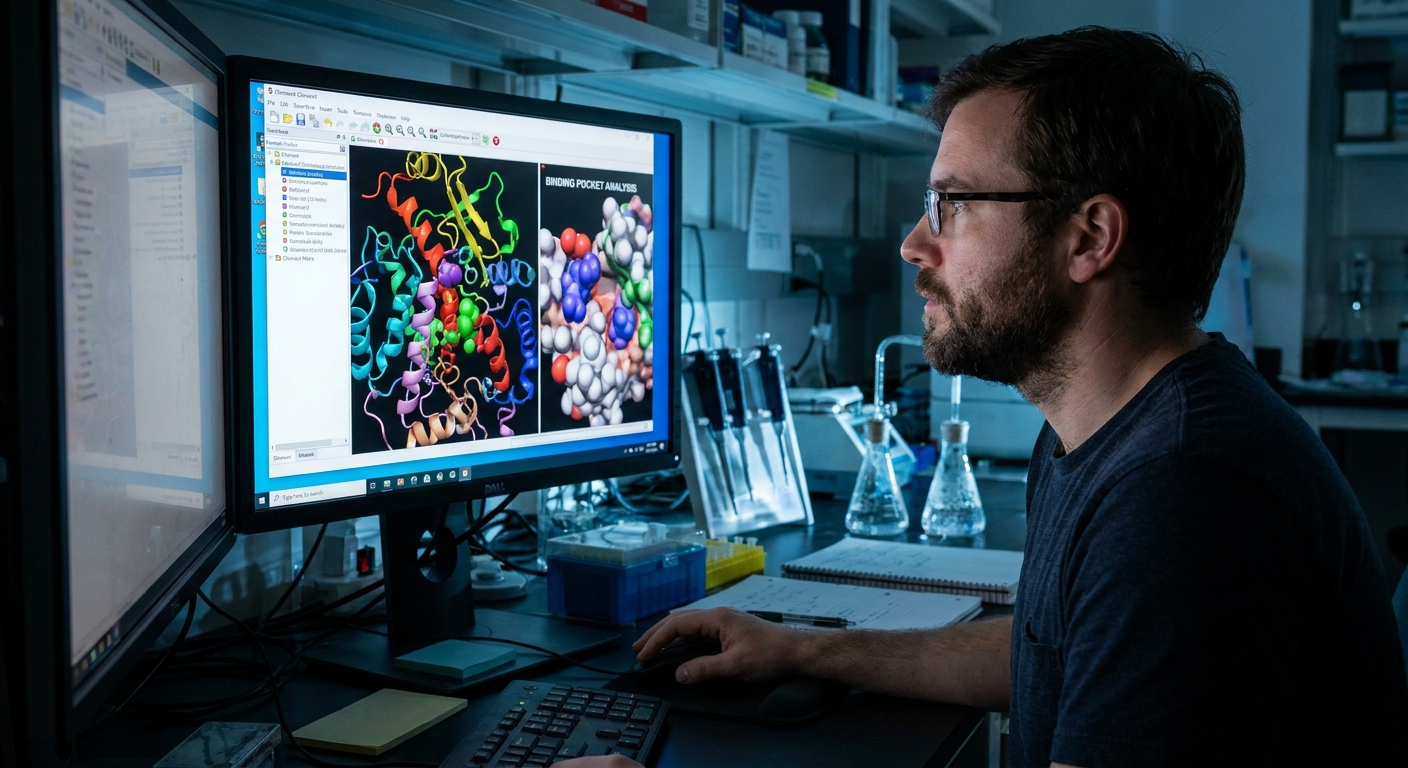
Structure-based drug design starts with a concrete question: what does my target look like in three dimensions, and where does a small molecule bind? Experimental crystallography answers that question definitively but takes months. Computational structure prediction answers it in hours — and the accuracy of modern prediction methods has made that answer reliable enough to base drug design decisions on.
When You Need a Predicted Structure
The Protein Data Bank contains experimental structures for a fraction of the human proteome. For emerging targets, orphan receptors, intrinsically disordered proteins, and novel pathogen proteins, no experimental structure may exist at all. For many others, only a structure of the apo protein is available — without the ligand or conformational change induced by binding.
Modern structure prediction has changed what is possible here. Models trained on the relationship between sequence and experimentally determined structure can now predict protein folds with accuracy approaching that of crystallography for many protein classes — and can model protein-ligand and protein-protein complexes that are experimentally difficult to capture.
End-to-End: Prediction to Pose
BioMate runs the complete sequence-to-docking pipeline in one step. Structure prediction generates a high-confidence three-dimensional model of the target. Pocket detection and druggability scoring identify the binding site or confirm the one you specify. Flexible molecular docking then places candidate compounds into the binding site, accounting for receptor flexibility that rigid docking misses — a critical factor for targets where the binding site shape changes significantly on ligand binding.
"The time from sequence input to a ranked set of docking poses, confidence-annotated and ready for medicinal chemistry review, is measured in hours — not months."
Confidence and Uncertainty
BioMate surfaces the confidence of every prediction alongside the result. Structure prediction confidence scores (per-residue and global) indicate where the model is reliable and where it is uncertain. Docking poses are ranked by multiple scoring functions and flagged when they disagree substantially — a signal that the binding mode prediction may be uncertain and experimental validation is particularly important.
Further reading: AlphaFold Protein Structure Database (EBI/DeepMind), AutoDock molecular docking suite (Scripps Research), RCSB Protein Data Bank, and Jumper et al. 2021 — AlphaFold2 in Nature.
Structure-based design is accessible for any target you can provide a sequence for — not just the fraction of the proteome with solved structures. GPU-accelerated computation on cloud infrastructure means you do not need to wait for computing time or manage hardware.