
Before the first compound is designed, medicinal chemists need answers to three questions: Is there a protein that drives this disease? Can a small molecule reach and bind its functional site? And will perturbing it produce the desired biological effect without harming normal tissue? Answering all three computationally — before any chemistry begins — is what separates efficient drug programs from expensive ones.
What Makes a Good Drug Target
Not every protein implicated in a disease is a viable drug target. A target must be causally involved in the pathology, not merely correlated with it. Its structure must contain a binding site — a pocket — that is geometrically and chemically accessible to small molecules. And it must be expressed in a way that makes selective modulation possible without producing intolerable on-target toxicity in normal tissue.
Historically, establishing all three required years of biochemistry and genetics. Computational methods now let teams assess all three in parallel, within days, before committing resources to chemistry.
Structure Prediction and Pocket Analysis
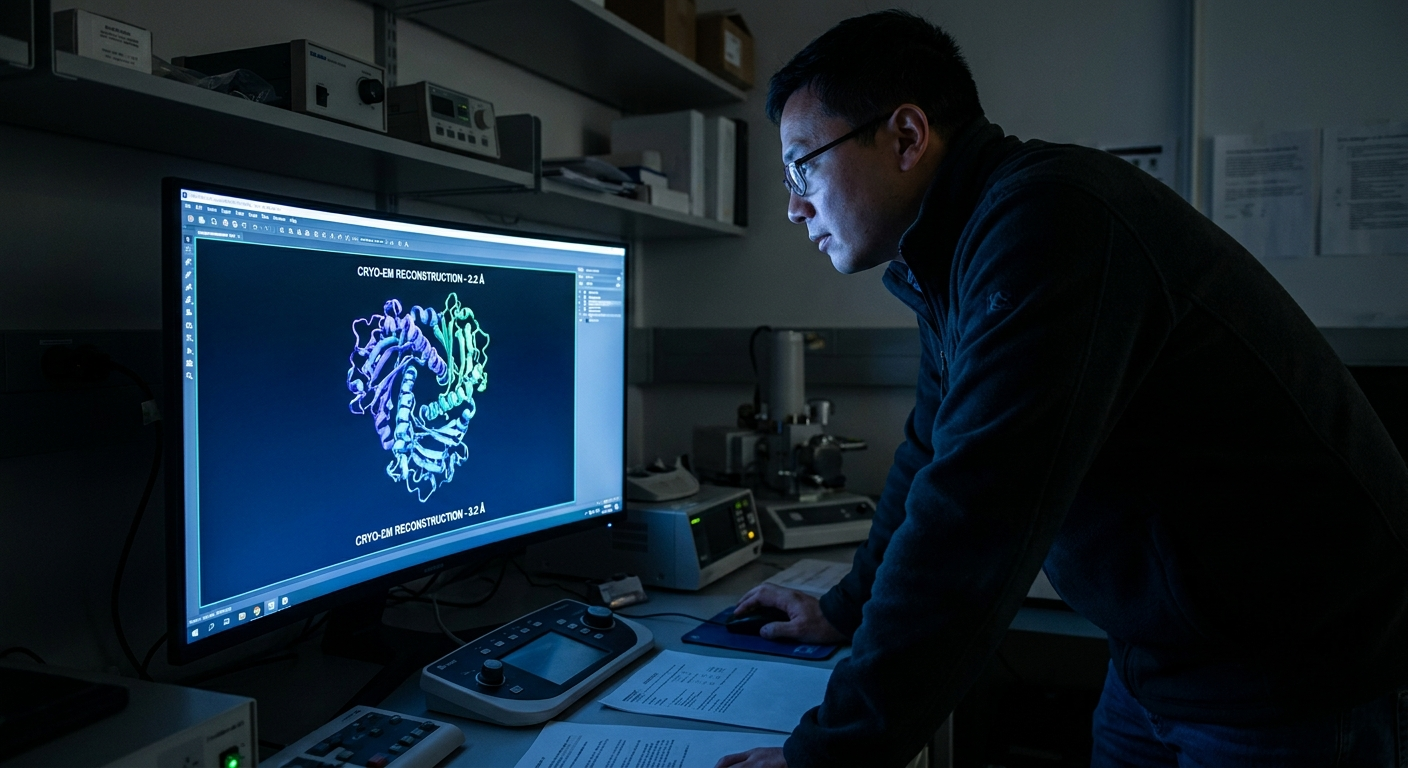
BioMate integrates state-of-the-art protein structure prediction, including models trained on the full scope of known protein sequences and structural data. When an experimental structure is unavailable — which is true for most novel targets — the predicted structure provides the starting geometry for all downstream structure-based work. BioMate then runs automated pocket detection and druggability scoring, identifying binding sites and quantifying their likelihood of supporting potent, selective small-molecule binding based on geometric and physicochemical properties.
"A high-confidence, druggable pocket on a causally validated target is worth more than ten interesting proteins with no clear binding site."
Functional Genomics Validation
BioMate integrates CRISPR screen analysis for target essentiality — determining which genes, when knocked out, produce a disease-relevant phenotype in the cell lines or organisms of interest. It also supports drug mechanism-of-action RNA-seq analysis, which profiles transcriptional response to known compounds to identify the gene networks a target sits within. ATAC-seq chromatin accessibility analysis reveals whether the target's regulatory elements are accessible in the cell types of interest, providing additional context for tissue specificity.
Further reading: AlphaFold Protein Structure Database (EBI/DeepMind), DepMap Cancer Dependency Map (Broad Institute), UniProt protein database, and RCSB Protein Data Bank.
Target selection decisions that previously required months of experimental follow-up can now be informed computationally in days. Teams can evaluate a larger space of candidate targets, deprioritize ones with poor druggability or weak genetic validation, and enter hit discovery with a higher-confidence starting point.