
Drug Discovery Workbench
Better decisions.
Faster discovery cycles.
Bring disease biology, molecular design and experimental evidence into one AI workbench. Carry each result into the next decision, with a clear record of how you got there.
Start with the biology
Find the targets
worth pursuing.
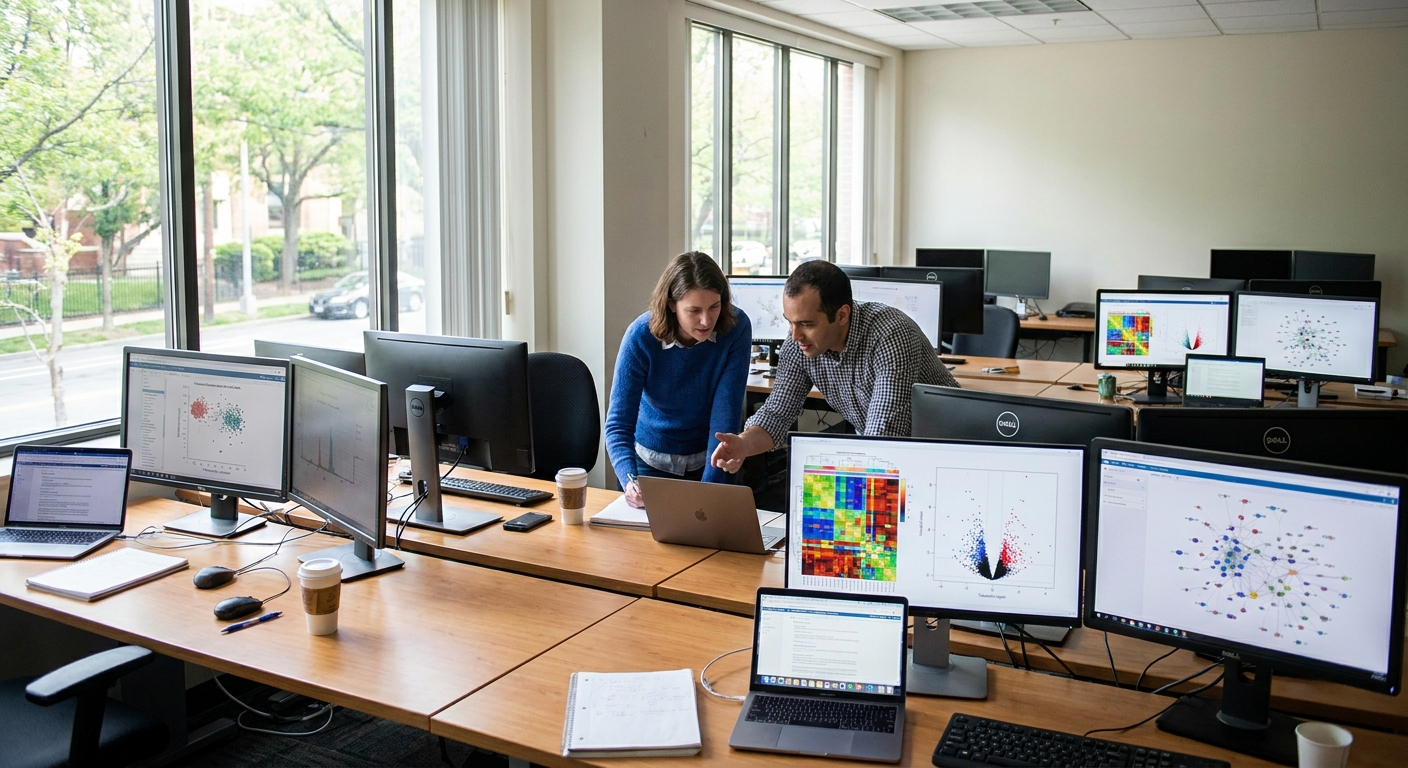
Connect genetic evidence, multi-omics, literature and structural information to prioritize targets and examine the rationale behind them.
Our research in immune biology and Virtual Cell LLM aims to deepen this process through models of cellular state and response.
A connected discovery process
Keep the science moving
between decisions.
Design and evaluate
Explore molecular candidates with generation, structure modeling, docking and property prediction. Review trade-offs across potency, selectivity and feasibility.
Explore discovery capabilities →Assess developability
Bring ADMET, safety and pharmacokinetic modeling into candidate review. Keep predictions linked to their methods and assumptions.
Explore ADMET →Learn from experiments
Connect assay observations with computational results to compare candidates and inform the next round of design.
Discuss your assay loop →Molecular generation research
A deeper focus
on cyclic peptides.
We are developing generation models focused on cyclic peptides, linking molecular structure and target context with candidate evaluation.
The broader workbench also supports small-molecule discovery workflows. Our cyclic-peptide program builds specialized models within this wider research environment.
Efficiency across the program
Less repeated setup.
More connected learning.
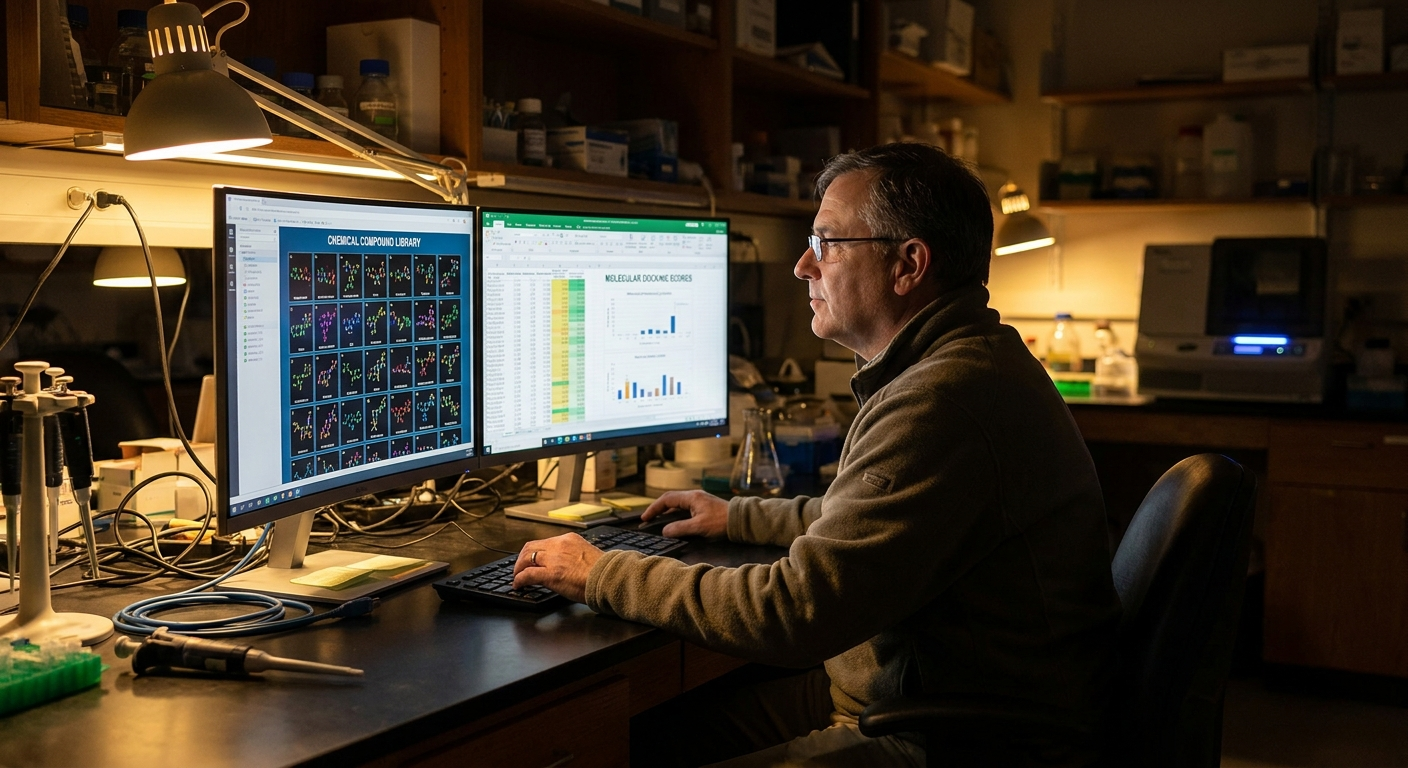
AI helps organize the plan, execute analyses and prepare reviewable results. Reuse data and methods across rounds while your team directs the scientific decisions.